We develop thermoplastic composite parts for a range of industries. Table tennis blades and speaker drivers illustrate how we tailor materials and layups to each product.
Sports · composite table-tennis blades
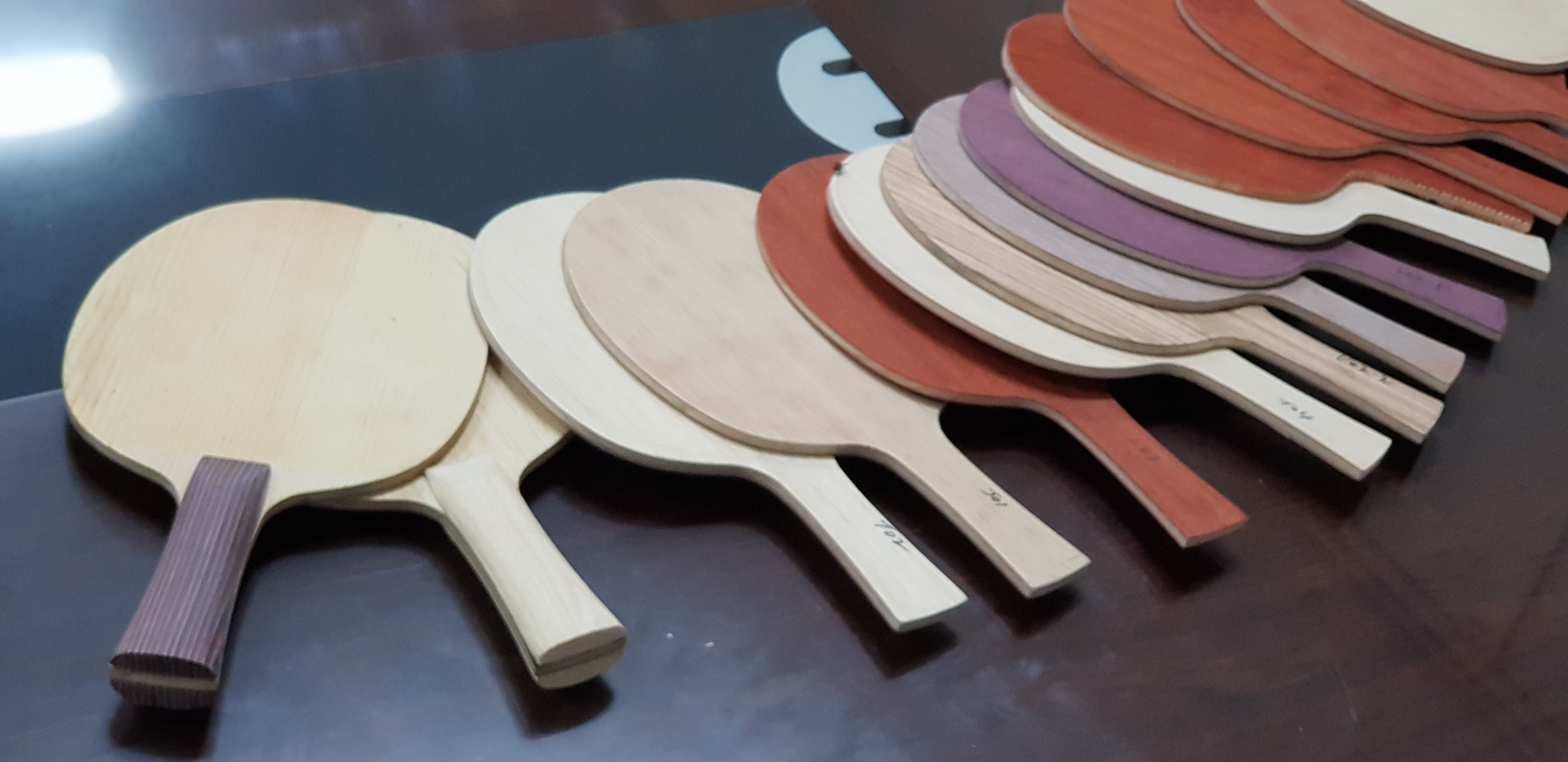
Combine wood characteristics and composite stiffness while considering blade weight, thickness, feel and control. CARO connects composite-layer development with blade and handle design, manufacture and assembly.
Composite table-tennis blade development example
Materials and layup
Combine two Carbon/Elium® or Basalt/Elium® composite layers with wood veneers and a core. Fabric specifications, wood species and layer thickness are selected for the intended use.
Playing characteristics
Adjust stiffness, weight and balance for offensive, defensive and other playing preferences. Feel and control are assessed with prototypes.
Blade and handle manufacture
Consider profile design, machining, wood/composite bonding and handle assembly together. Handle shape and materials can be developed for the required grip.
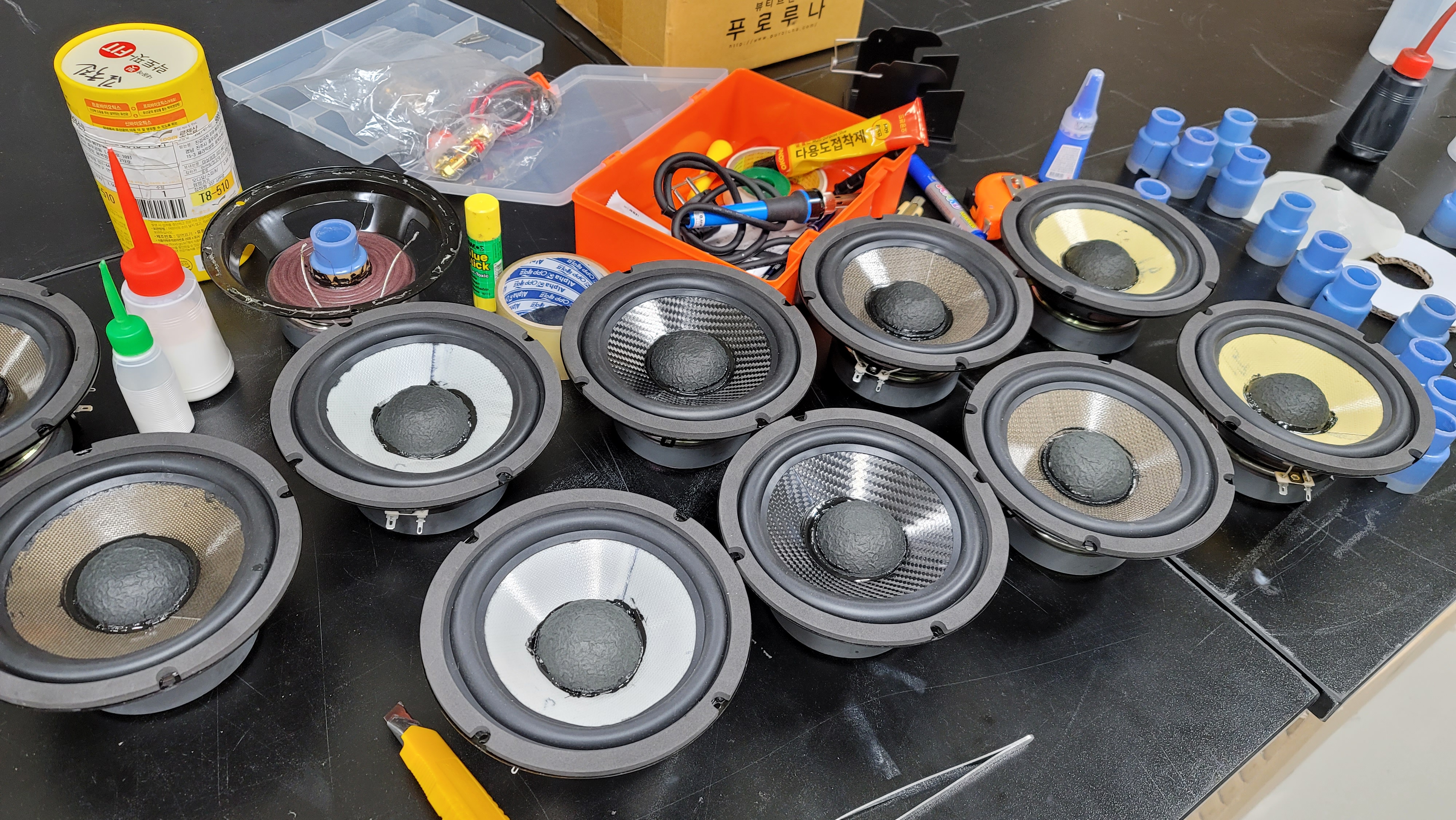
Speaker diaphragms require consideration of low weight, stiffness for shape retention and vibration damping. CARO has experience combining fabric, resin, thickness and cone geometry, then assembling formed diaphragms into drivers for acoustic evaluation.
Composite diaphragms
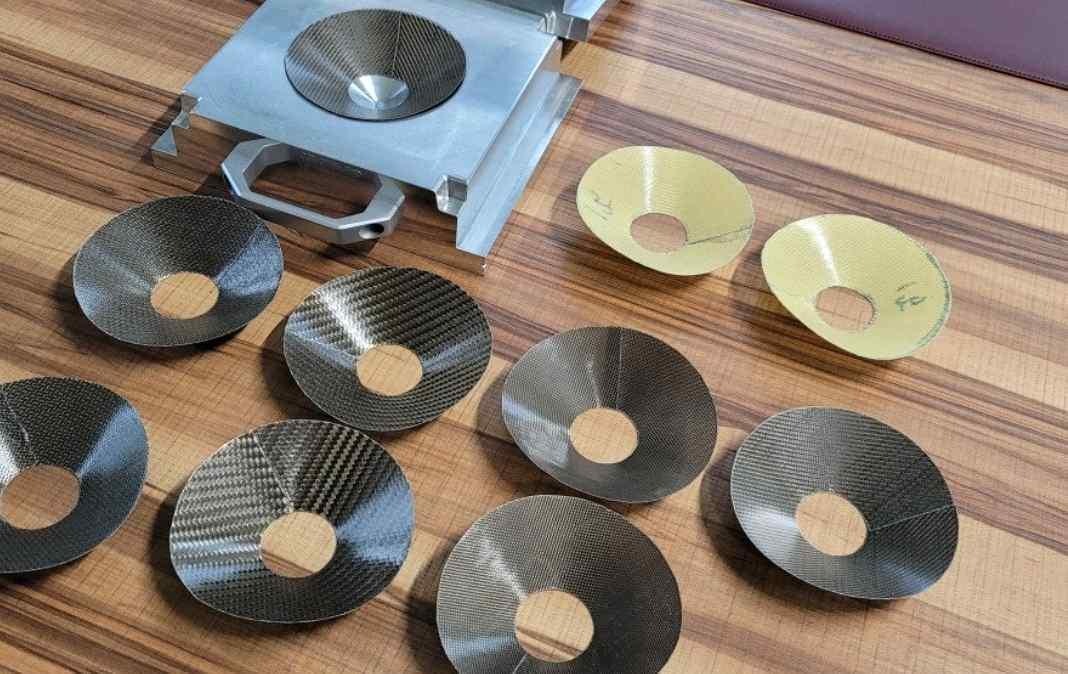
Composite diaphragm prototypes
Consider Carbon/Elium® and Basalt/Elium®. Fiber/fabric specifications, resin content, layup and geometry are selected against the required frequency range and driver structure.
Forming and driver assembly
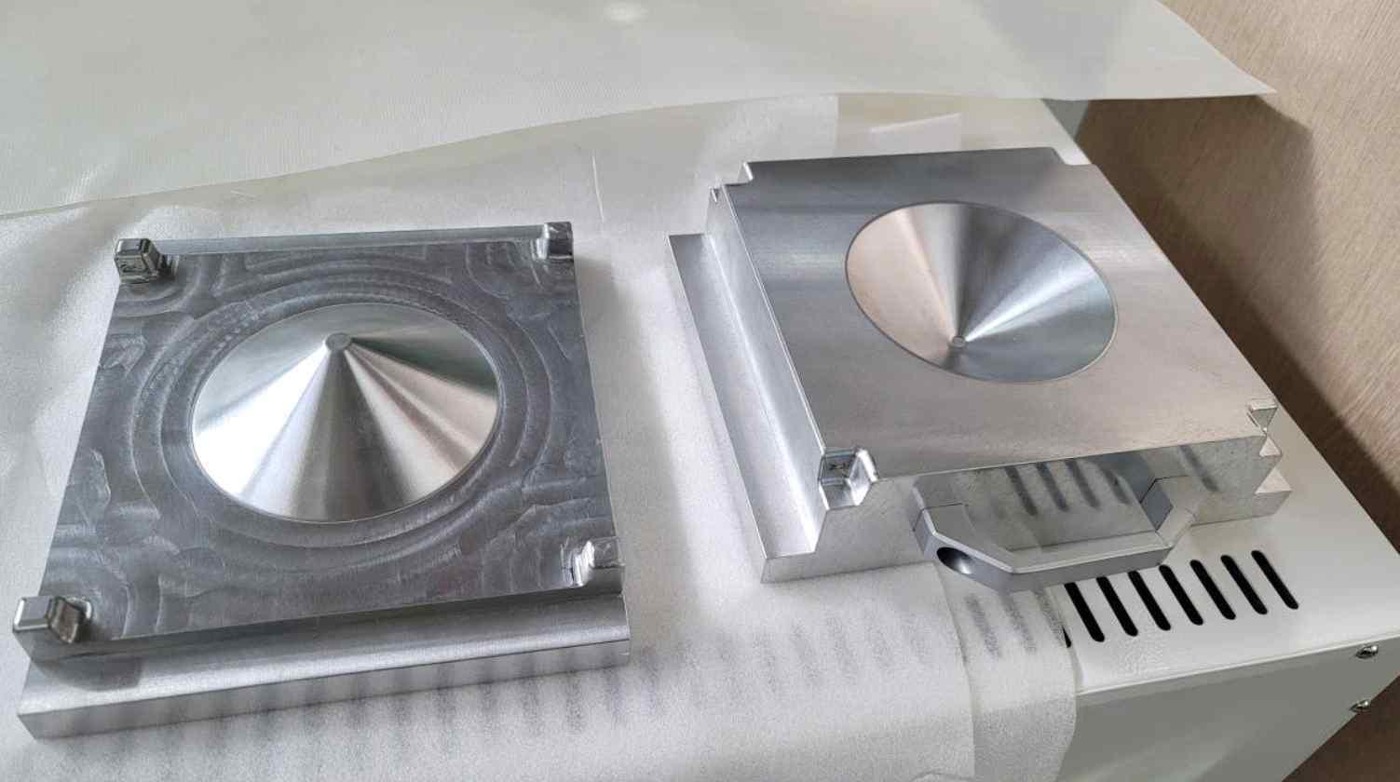
Diaphragm forming tooling and prototypes
Connect material preparation, preheating, mold forming and perimeter finishing. Assess assembly and bonding of the formed cone and driver components such as the surround.
Acoustic evaluation
Speaker listening evaluation
Assess prototypes through listening and sound-pressure measurements. Verify the complete driver rather than infer sound quality from material properties alone.
Benefits of Thermoplastic Composite Speaker Cones
Designing low mass, stiffness and vibration damping together to meet the requirements of a speaker cone.
Low Mass and Shape Retention
Fiber reinforcement allows diaphragm mass and stiffness to be tuned together. Low moving mass combined with adequate stiffness supports designs that consider dynamic response and the piston-like operating range.
Tunable Vibration Damping
Resin, fiber and layup choices are used to balance damping and stiffness. Their potential to control unwanted resonances is verified through frequency-response and driver testing.
Application-Specific Materials and Geometry
Fiber type, fabric specification, resin content, thickness and cone geometry can be selected for the required frequency range and driver size.
Heat Forming and Process Consistency
Thermoplastic materials can be heated, formed in a tool and cooled. Temperature, pressure and cooling controls are considered to reduce variations in geometry and thickness.
Toughness for Handling and Assembly
Matrix toughness can support designs that address handling and assembly damage. Impact performance depends on the resin, fiber, thickness and joining details.
Reprocessing and Resource Recovery
Reprocessing and recycling routes depend on the resin and composite construction. Mechanical recycling and depolymerization-based chemical recycling are being developed for Elium®; practical implementation requires collection and processing infrastructure.
Acoustic performance depends on the complete driver and system, including cone geometry, surround, suspension, voice coil and enclosure. Frequency response, distortion and sound pressure are evaluated at system level. Historical prototypes shown here are distinct from current Elium® development work.
Audio · Composite Enclosures and Baffles
CARO has developed speaker baffles formed from thermoplastic composites. As the front panel that supports the speaker drivers, the baffle is designed and formed with attention to driver positions, openings, three-dimensional geometry and mounting interfaces.
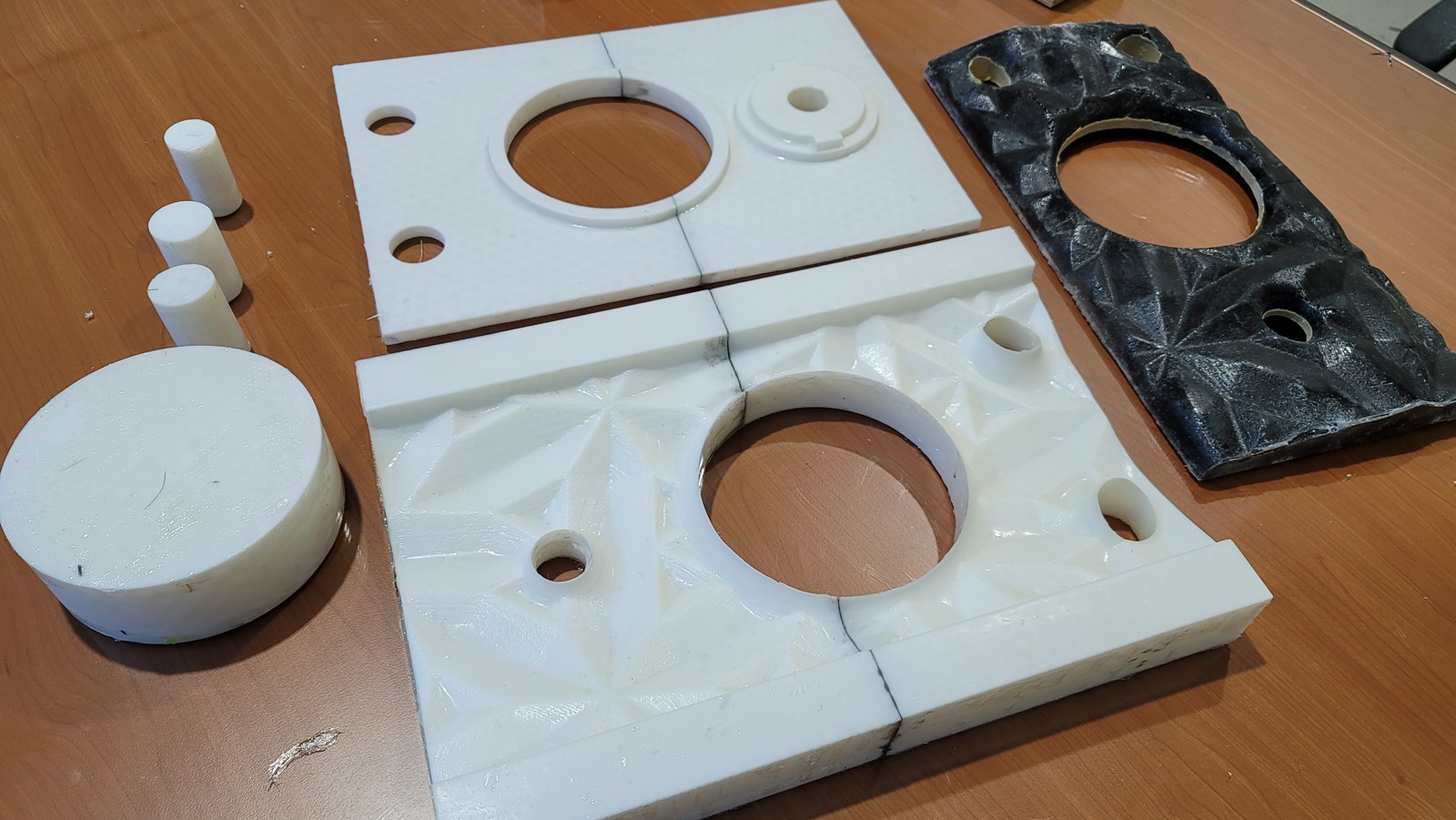
Composite Design · 3D Printing
Composite Design · 3D Printing
Before making the forming tool, a 3D-printed model is used to review baffle geometry and driver positions.
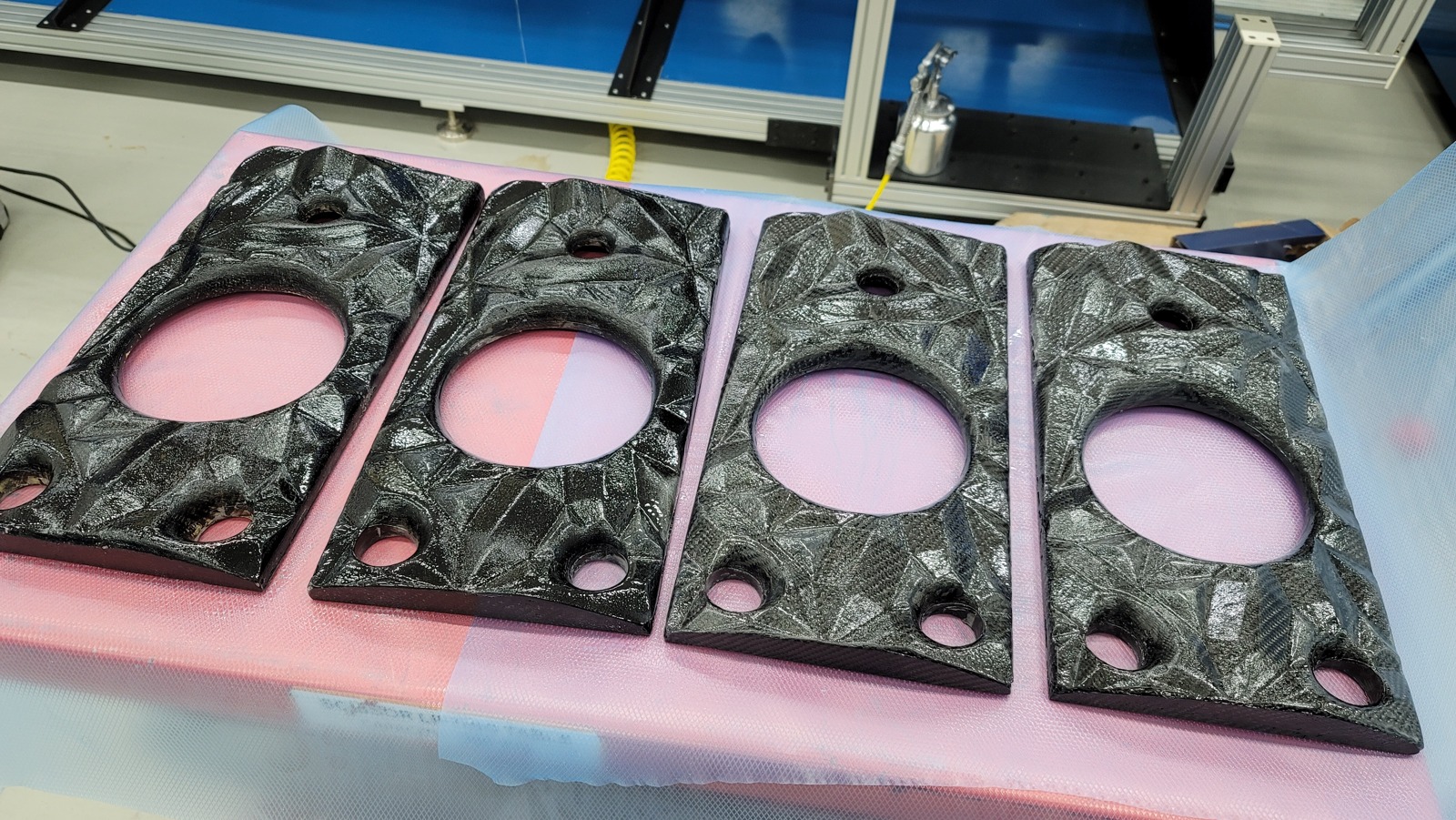
Thermoplastic Composite Baffle Forming
Thermoplastic Composite Baffle Forming
The reviewed design is formed in thermoplastic composite, with shape and mounting interfaces checked.
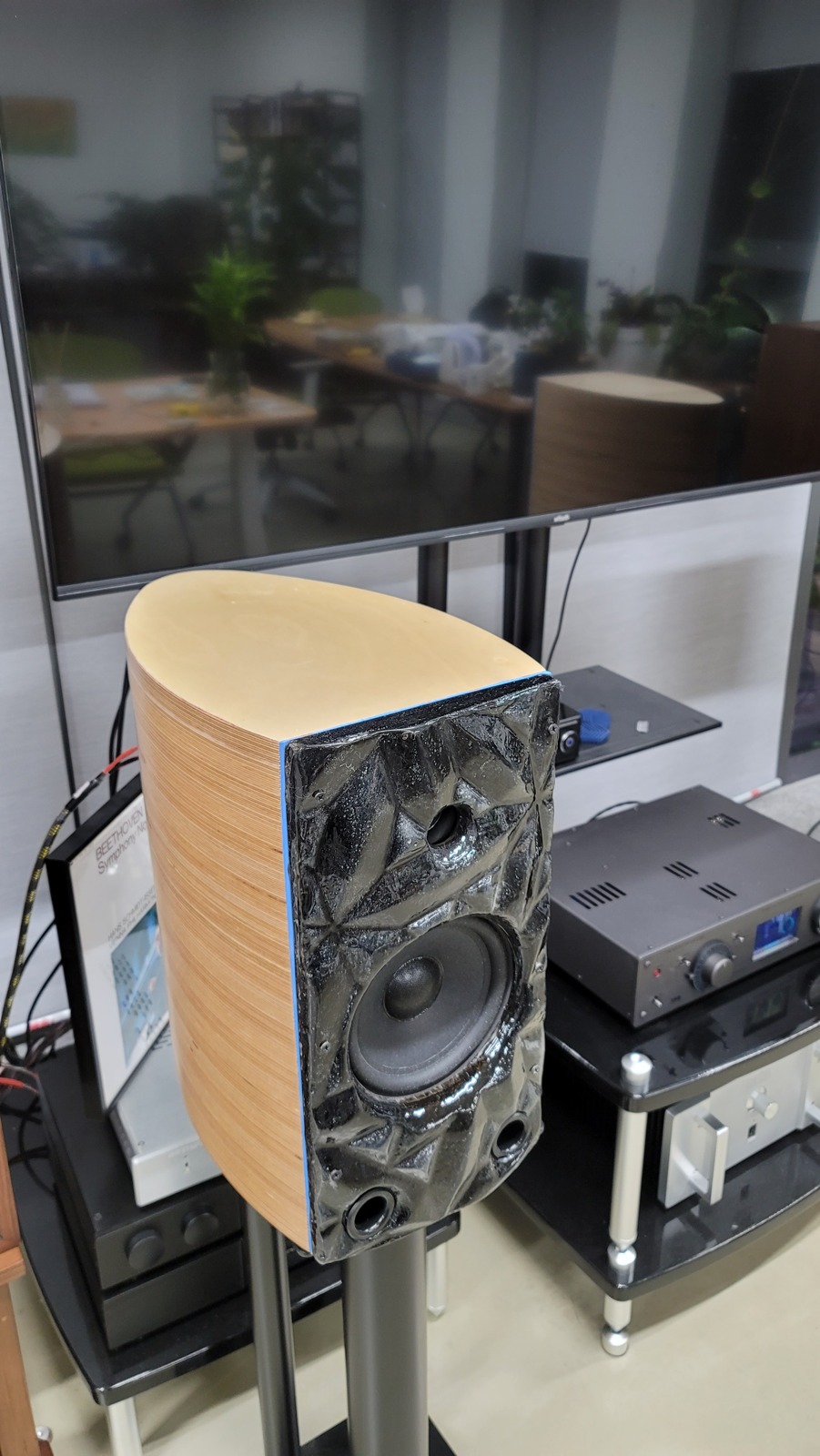
Speaker with Composite Baffle
Speaker with Composite Baffle
A formed baffle assembled with drivers for installation and evaluation.
The photographs show CARO-made thermoplastic composite baffles and a prototype mounted on a wooden enclosure. The composite component is the front baffle; the wooden cabinet was used for assembly and evaluation.
Prototype manufacture and evaluation experience
Table-tennis blades
Table tennis blade prototypes
The 2017 records of DK (D&K Composites), CARO’s predecessor business, document wood/composite combinations, blade and handle design, machining, bonding and multiple prototypes.
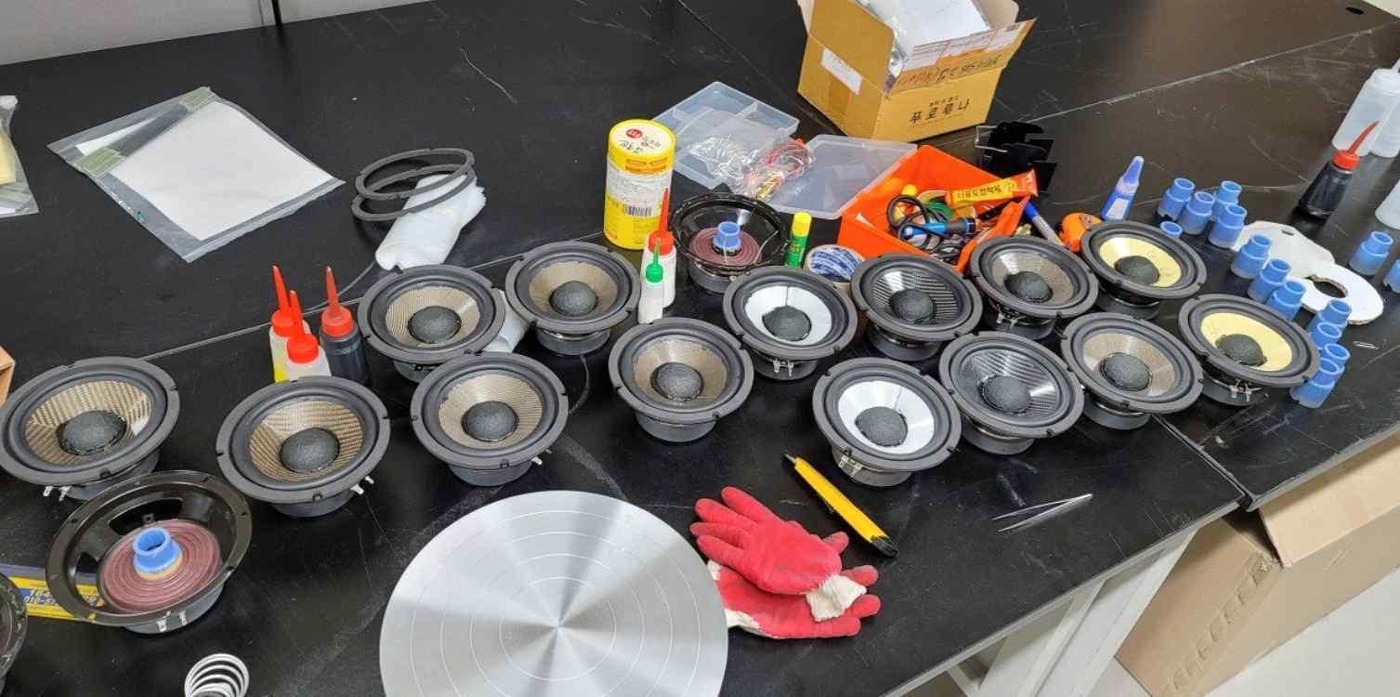
Speaker diaphragms and drivers
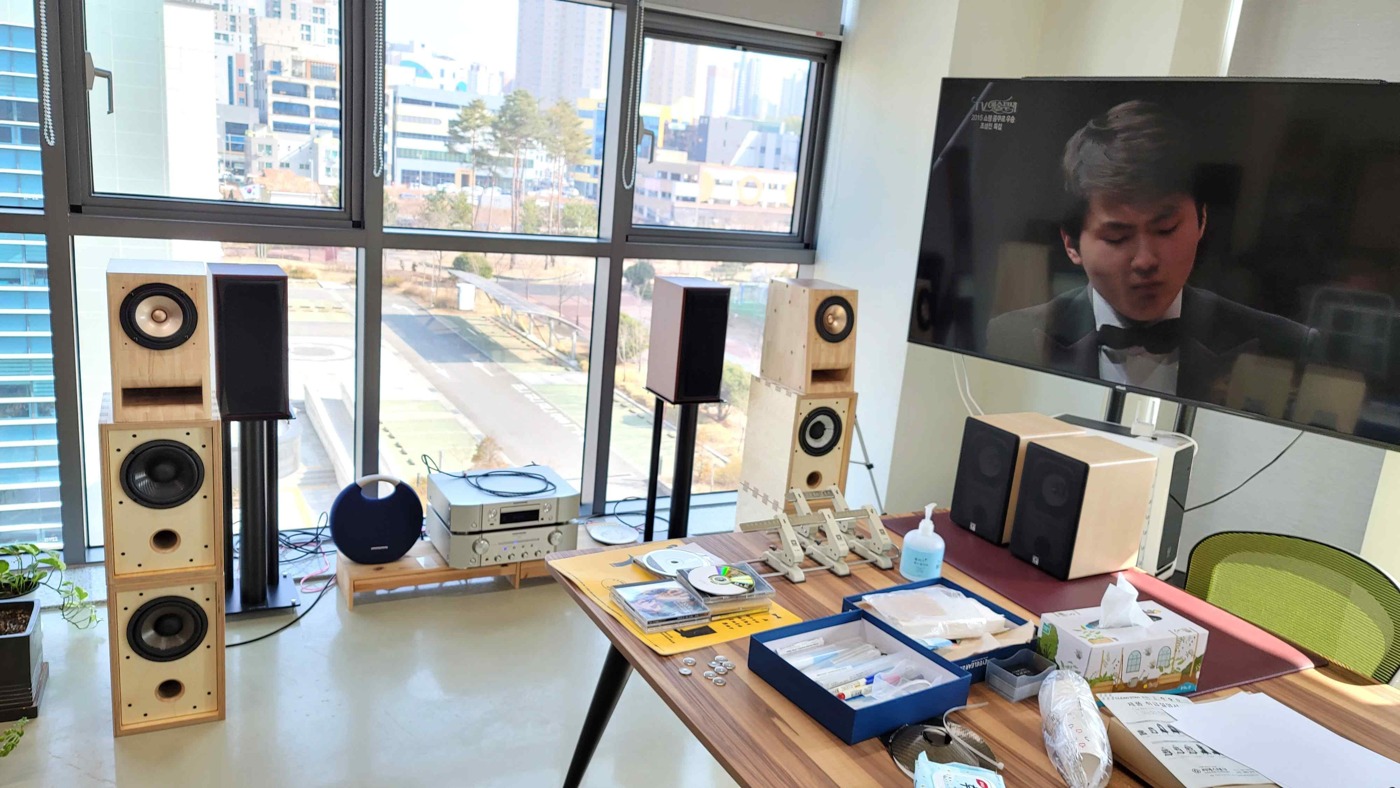
Speaker unit prototypes
The 2020 development reports document diaphragm forming with multiple fibers and hybrids, driver assembly and listening evaluations.
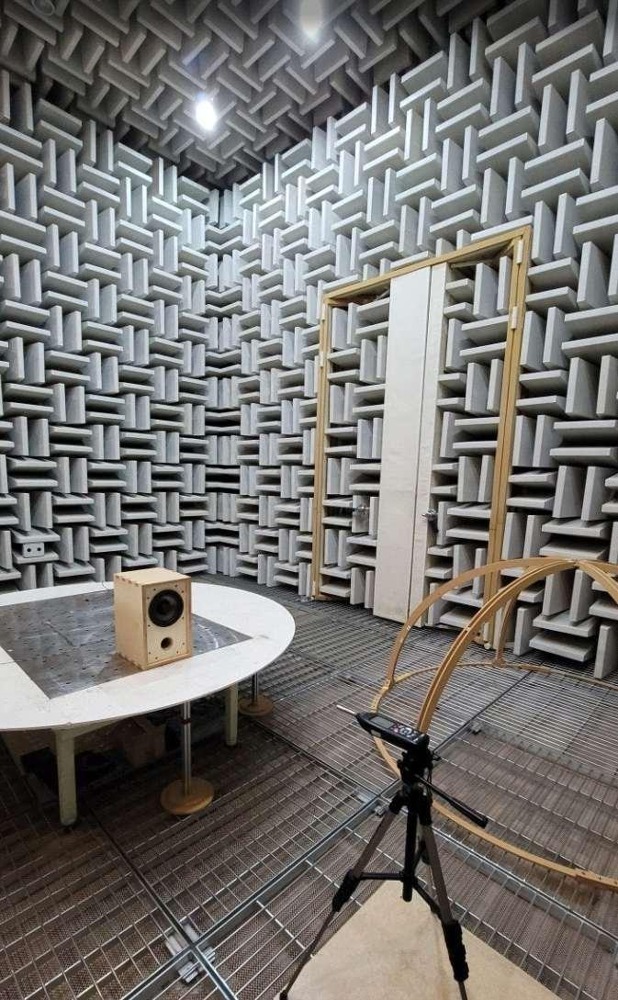
External sound-pressure testing
External acoustic testing environment
Reports KOTMI-21-A013, A014 and A015 from the Korea Textile Machinery Convergence Research Institute document SPL measurements for G01, C01 and B01/B02 specimens.
Earlier blade development includes epoxy composites; speaker development includes PP composites. These records demonstrate development, manufacturing and evaluation experience. Performance of current Elium® products is assessed separately.
Expansion into industry, energy and construction
Wind-energy and solar structures, and construction components, are prospective prototype-development fields. CARO holds FRP rebar-related patents. Materials and structures are selected against loads, service environments and required specifications.
From product idea to prototype
Material selection → layup design → prototype manufacture → evaluation and technical support for production. Drawings or reference products accelerate review; development scope can also be discussed from an initial idea. Before sharing detailed drawings or technical information, agree an NDA or an MOU with confidentiality provisions as needed.