Certified Buoys
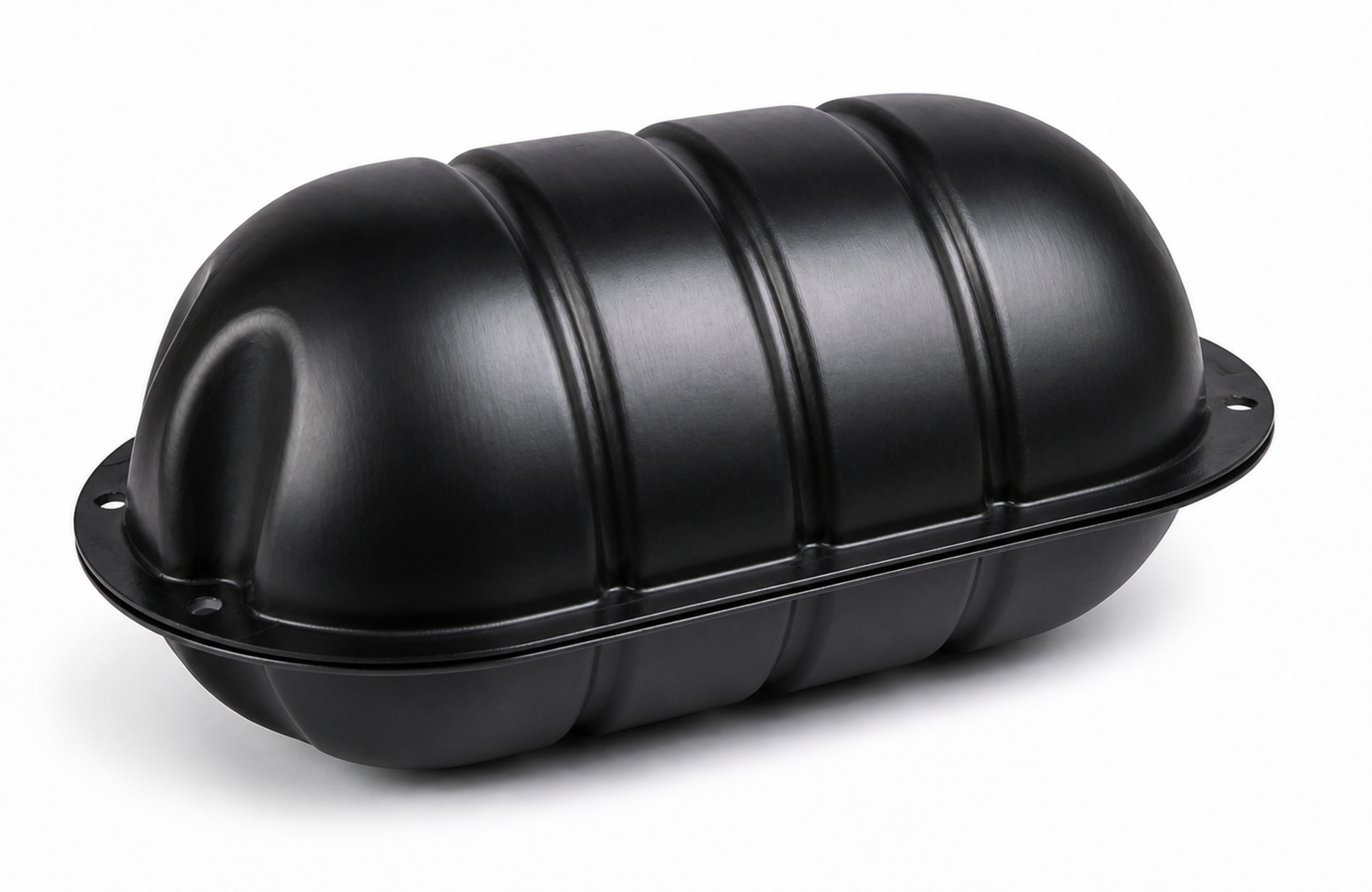
- High-durability ceramic fiber composite buoy
- Structural strength and durability
- Shell designed for impact and abrasion
- Materials and structure suited to marine environments
- Design balances stiffness and weight
 한국어
MARINE & BUOY
Thermoplastic composite buoys certified by Korea’s Ministry of Oceans and Fisheries.
Having passed KCL certification tests and the certification review, our products are manufactured with materials, structures and processes that consider durability and weather resistance in marine environments.
Thermoplastic composite laminate is formed into buoy products, connecting material manufacture with tooling and forming.
A certified buoy manufactured for sale, beyond a development concept. Supply specifications and quantities are confirmed for each inquiry.
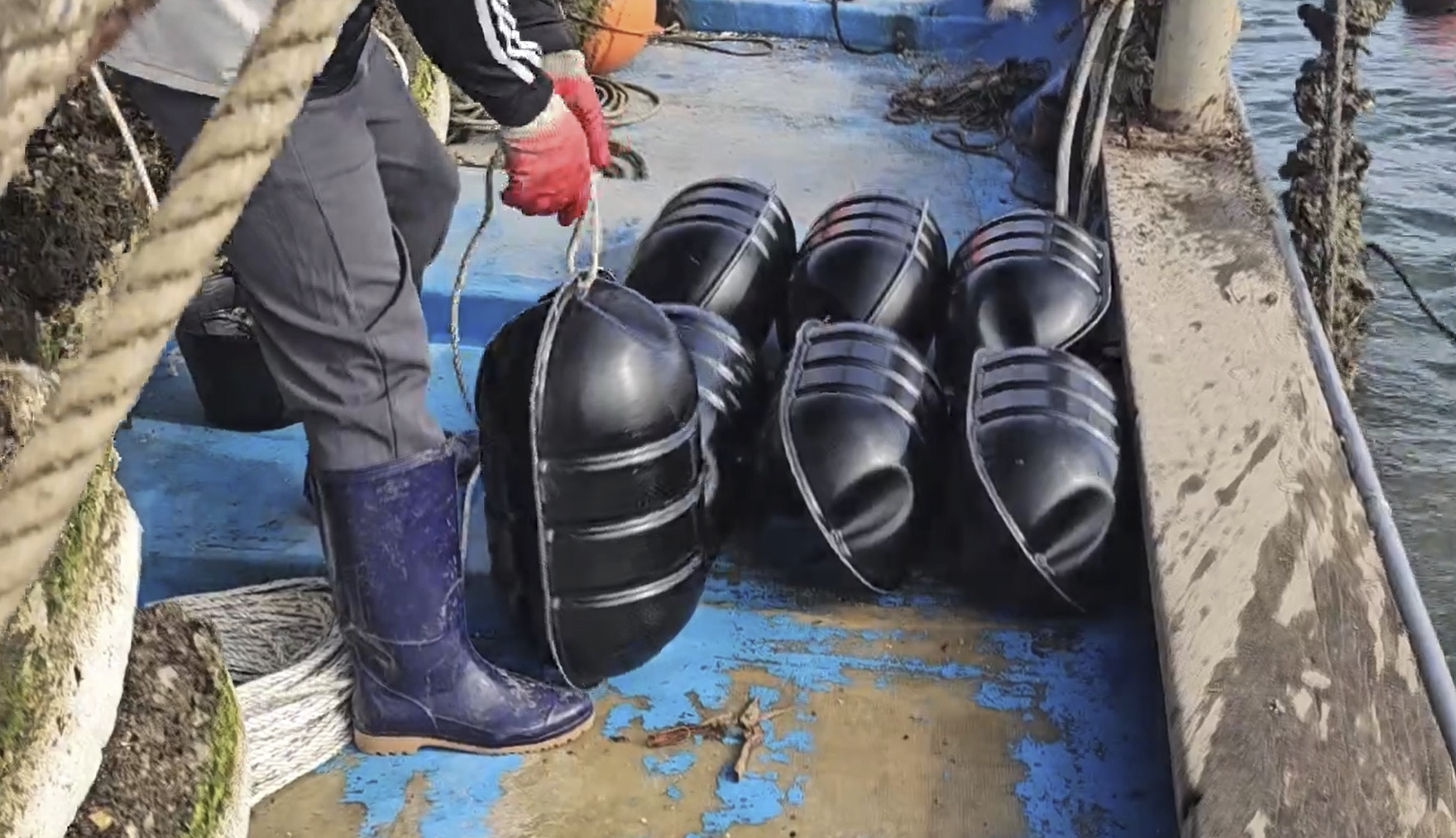
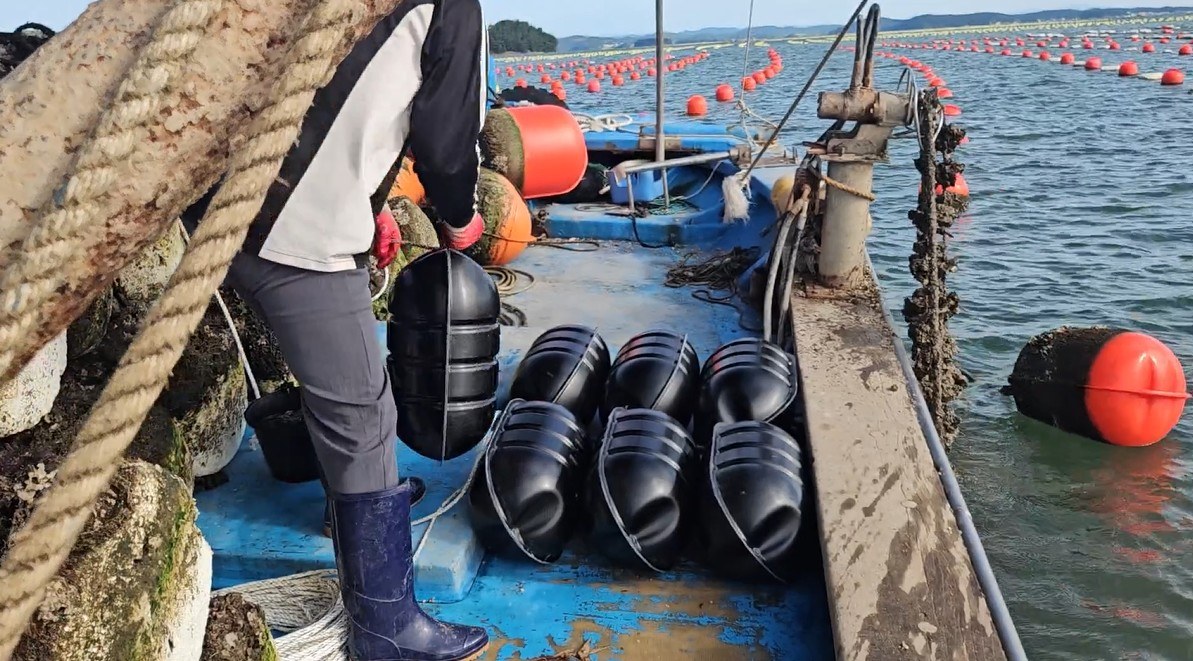
Actual aquaculture installation experience and field photographs are available. Product selection is reviewed against the installation environment and intended use.
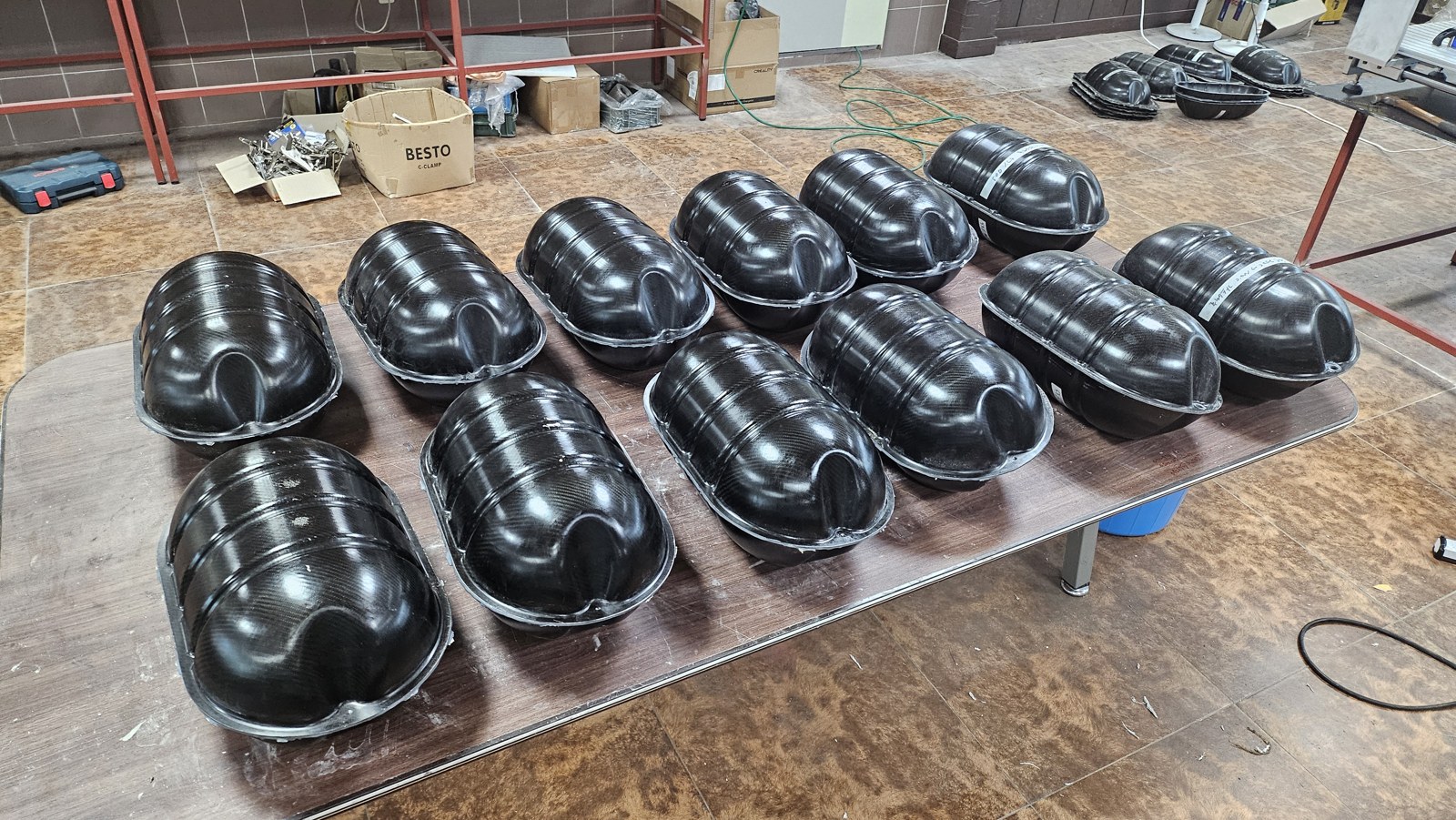
The manufacturing workflow connects preparation, forming, finishing, joining and stacking. Process and equipment refinement continues.
THERMOPLASTIC COMPOSITE BUOY · BENEFITS
Fiber reinforcement and layup address shell strength and shape retention for repeated use at sea. Product durability includes attachment and joining regions.
The composite structure considers impacts during handling and installation, and abrasion in service. Inspection and damage management are important for long-term use.
The buoy addresses sunlight/UV, temperature changes, moisture and seawater exposure. Shell/joint condition and retention of properties and buoyancy after exposure are important quality considerations.
Strength and weight are considered together for handling and installation. Actual product weight and attachment arrangements are specified by model.
Shell/joint integrity and buoyancy retention matter in service. Rated buoyancy and test results are managed against the certified-model reports.
Material reprocessing and recycling routes can be considered. Collection, separation and recycling depend on the constituent materials and contamination.
Inspect the surface, attachments and joints, and manage damaged products. Repair and reuse are assessed against damage and product structure.
Thermoplastic laminate forming and integrated automation support repeatable production, with coordinated material, forming, joining and product-quality checks.
Service life and performance depend on installation conditions, loads and maintenance.
RESPONSIBLE MARINE USE
Inspect shells and attachments to manage damage and loss, with collection of damaged products and debris.
Collect products rather than leave them at sea, and consider resource-circulation routes using thermoplastic reprocessing potential.
Environmental test items and substance results are communicated against the reports.
| Product | CARO composite buoy |
|---|
Final supply specifications are confirmed against the certified model and product specification.
Vessel and marine structural components are future application areas. Certified-buoy manufacture and sale are distinguished from prototype-development services for customer components.